Thinking about leaving Denver for a little more breathing room? Parker is often on the shortlist for buyers who want a more residential feel, more homeownership, and easier access to parks and trails without cutting themselves off from the metro. If you are weighing that move, it helps to look past the broad “suburban vs. city” comparison and understand what daily life in Parker actually looks like. Here is what you should know before making the move from Denver to Parker.
Why Parker Stands Out
Parker offers a very different scale than Denver. According to the U.S. Census QuickFacts for Parker, Parker’s 2024 population was 65,473, compared with 729,019 in Denver. It also covers a much smaller footprint, which contributes to a more residential, lower-density feel.
That difference shows up in housing too. Parker’s owner-occupied housing rate was 71.8%, while Denver’s was 48.8%, based on the same Census QuickFacts data. For many Denver buyers, that points to a community where homeownership plays a bigger role in the overall housing mix.
Parker is also growing. The town increased 11.9% from its 2020 census base to the 2024 estimate, which helps explain why it continues to come up in relocation conversations. If you want a suburb that feels established but still active and evolving, Parker checks that box.
What Parker Feels Like Day to Day
If Denver feels a little too busy for the season of life you are in, Parker may appeal to you for a simple reason: it tends to offer a quieter residential pattern. That does not mean it is isolated. It means your day-to-day environment is more likely to center on neighborhoods, local amenities, and open space rather than dense urban activity.
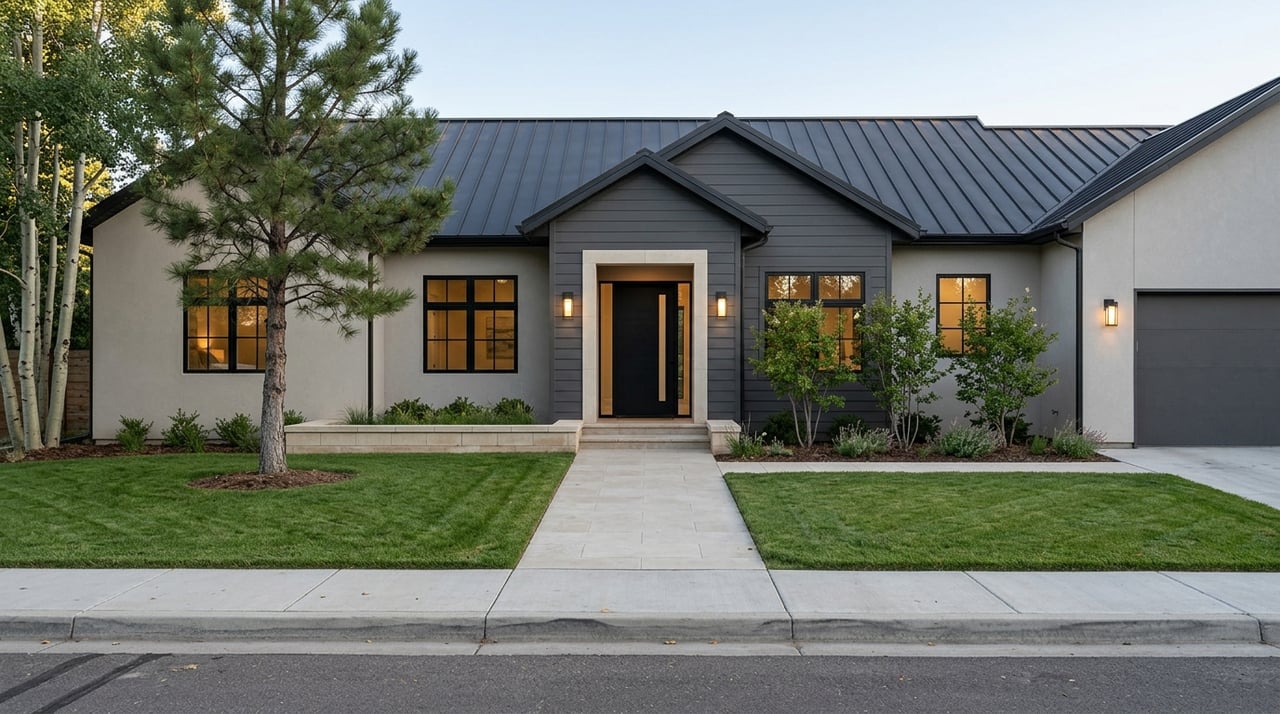
Parker’s planning documents show that detached housing has long shaped the town’s identity. In the town’s housing chapter and master plan materials, a past housing snapshot showed 75% single-family detached homes, with apartments, townhomes, and condos making up the remainder. Today, the town also reviews single-family, duplex, townhouse, and multifamily projects, so buyers have a broader mix of options than they might expect.
That broader mix matters if you are not looking for the same type of home you had in Denver. Whether you want a detached home, a townhome, or something lower maintenance, Parker offers more than one lane. Still, the overall feel remains more suburban than urban.
Don’t Assume Parker Is Cheaper
One of the biggest mistakes Denver buyers make is assuming that moving farther out automatically means spending less. In Parker, that is not always the case. The numbers suggest you should compare lifestyle value, not just sticker price.
The latest Census QuickFacts show Parker’s median owner-occupied home value at $646,300, slightly above Denver’s $616,000. Median gross rent was also higher in Parker at $2,096, compared with Denver’s $1,831.
Parker’s median household income was reported at $133,369, compared with Denver’s $94,718. That helps explain why Parker is not automatically a budget alternative. You may get a different living environment and often more residential space, but you should not approach the move assuming the math will be easier.
Commuting From Parker to Denver
Your commute is one of the biggest practical questions in any relocation decision. If you still need to get into Denver regularly, Parker can work, but it is important to understand the setup. It is generally a better fit for people who drive, use commuter options selectively, or work hybrid schedules than for those who want a rail-first lifestyle.
Parker’s mean travel time to work is 26.1 minutes, compared with Denver’s 24.9 minutes, according to Census data. That gap is not huge on paper, but your real experience will depend on exactly where you live, where you work, and how often you make the trip.
The town does have several public transportation options. Parker’s public transportation page lists Parker FlexRide, Route PD to downtown Denver, Route 483 to the Lincoln Light Rail station and Nine Mile station in Aurora, Access-a-Ride, and Park-n-Ride options. The Parker Park-n-Ride at 10740 Longs Way has 173 spaces and serves Routes PD and 483.
There is also a newer mobility option. The town’s Link On Demand service expanded into select Parker areas on April 8, 2026, offering free rideshare connections within parts of Parker and to Lone Tree and Highlands Ranch. For some buyers, that adds flexibility for errands, appointments, or local connections during the week.
Downtown Parker Has Real Character
Not every suburb has a memorable center, but Parker’s historic core is part of its appeal. If you want a place with a local identity beyond rooftops and retail, this is one of Parker’s stronger selling points. The town leans into that character in a visible way.
According to Parker’s historic preservation resources, the first structures in the area date to the 1860s, and the town recognizes 20 Parker Landmarks. The town also highlights historic sites such as the Schoolhouse, Ruth Memorial Chapel, and Parker Creamery.
That identity is reinforced in planning too. Parker’s Mainstreet vision calls for historically referenced western storefront architecture and Victorian-style design in parts of Old Town. For you as a buyer, that can make a difference in how a place feels over time. It gives the town center a sense of continuity that many newer suburban areas lack.
Parks, Trails, and Recreation
If your version of a lifestyle upgrade includes more access to outdoor space, Parker has a lot to offer. The town consistently emphasizes parks, trails, and recreation as a core part of community life. That can be a meaningful shift if you are looking for a more active or outdoors-oriented daily rhythm.
Parker’s facilities and recreation resources include Discovery Park Ice Trail, the Fieldhouse, H2O’Brien Pool, the PACE Center, the Recreation Center, and a broader system of parks and open space. The town also says its trail network supports biking, hiking, skating, and horseback riding.
As of Q2 2025, Parker reported 44.46 trail miles and 174.9 acres of parkland on that same town facilities page. If you picture weekends spent on trails, afternoons at local recreation amenities, or a routine with more outdoor access close to home, Parker is built for that kind of lifestyle.
Civic Services and Everyday Convenience
A successful relocation is about more than the home itself. You also want to know whether the town feels functional and connected in daily life. In that category, Parker feels more self-contained than some people expect.
The town’s services provided by others page identifies Douglas County School District as the local school provider and also points residents to Douglas County Libraries and other civic services. That matters because it helps create a stronger sense of local infrastructure and day-to-day convenience.
For many Denver movers, this is part of the appeal. You can get a more suburban setting without feeling disconnected from services, recreation, and community resources.
Who Parker Fits Best
Parker tends to fit Denver buyers who want more residential space, a stronger ownership-oriented housing environment, and better access to parks and trails. It also makes sense for people who appreciate having a historic town center rather than a purely new-build suburban feel.
It may be especially appealing if you work hybrid, commute only a few times a week, or do not need dense urban walkability to feel connected. Parker still offers workable links into the broader metro, but it is not trying to replicate central Denver.
On the other hand, Parker may be less natural fit if your lifestyle depends on dense, city-style walkability or if you strongly prefer rail-first commuting. In that case, the tradeoffs may feel more noticeable.
How To Evaluate the Move
If Parker is on your list, the smartest next step is to compare your current Denver lifestyle with the one you want next. Think about how often you commute, what type of home you want, how much outdoor access matters to you, and whether a quieter residential pattern feels energizing or limiting.
It also helps to tour with a clear framework. Look at the housing style that fits your goals, test the routes you would actually use, and spend time near the town center and recreation areas. That kind of practical comparison usually gives you more clarity than an online search ever will.
If you are weighing Parker against Denver or another south metro suburb, working with a local team that understands both city living and suburban tradeoffs can make the decision a lot easier. When you are ready to talk through neighborhoods, commute patterns, and home options, connect with Elise and The LoSasso Group.
FAQs
Is Parker, Colorado cheaper than Denver?
- Not necessarily. Recent Census data shows Parker’s median owner-occupied home value and median gross rent are both slightly higher than Denver’s.
Is Parker, Colorado good for Denver commuters?
- Parker can work well for some Denver commuters, especially if you drive, use Park-n-Ride options, or work a hybrid schedule, but it is generally less ideal for rail-first commuting.
What kind of housing is common in Parker, Colorado?
- Parker has long been shaped by single-family detached homes, though buyers can also find townhomes, condos, duplexes, and multifamily options.
Does Parker, Colorado have a walkable downtown area?
- Parker has a historic downtown character centered around Old Town and Mainstreet, but the overall community is still more suburban than dense urban.
What amenities does Parker, Colorado offer for daily life?
- Parker offers parks, trails, recreation facilities, civic services, library access, and commuter transportation options that support day-to-day convenience.
Is Parker, Colorado a good fit if you want more outdoor access?
- Yes. The town highlights parks, open space, recreation facilities, and more than 44 trail miles as part of its lifestyle appeal.